
Burst Fade Big Ears: How to Plan the Arc and Side Length
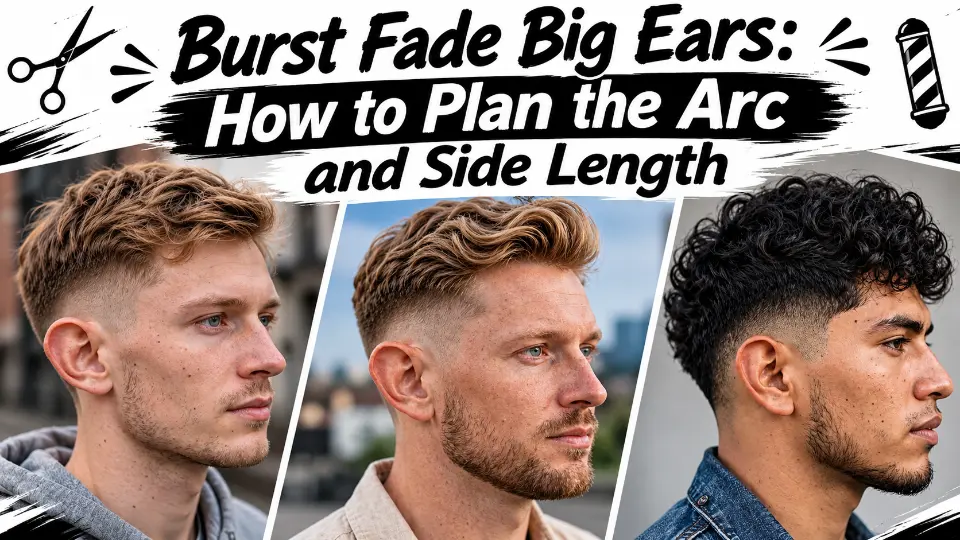
· Burst fade big ears keeps hair beside the ear, so big or sticking-out ears sit behind hair instead of on show.
· Choose a low or mid arc that starts behind the ear, so hair stays beside it and the blend looks gradual.
· Ask for a shadow or taper finish near the ear. A skin finish takes off hair there and shows more ear.
· Next step: tell your barber how much side length you want, then rebook on the window for your arc height.
What burst fade big ears means in the chair
Burst Fade for Big or Sticking-Out Ears is a burst fade, a fade that curves around the ear and leaves the back fuller, with length kept at the sides or back and the arc cut around the ear. The barber sets the arc and the blend. The reader keeps the top neat with a light product.
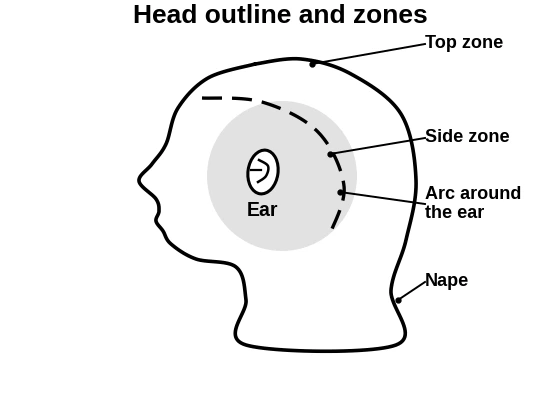
Picture a half-moon of short hair curving round the ear, with the back left longer behind it. With big ears the half-moon is the part to plan, because it decides how much hair sits beside the ear.
Ear size is not something a haircut changes. A cut can only change how much hair sits next to the ear. Less hair beside it shows more of the ear, and more hair beside it shows less.
For the full range of arcs and finishes, start at the burst fade styles homepage. This page deals with a narrower question: where to start the arc, how long to leave the sides and what finish to ask for near the ear.
Nobody has set a rule for when ears count as big. Point to the ear you mean, describe how you want the side to look and let your barber plan from there.
What changes around the ears
A standard burst fade is planned from the curve outward. With big ears, your barber plans from the ear first and then fits the curve around it.
| Decision | Standard plan | Big ears plan |
| Side length | Cut short for contrast | Kept longer beside the ear |
| Arc start | Chosen for looks | Low or mid, starting behind the ear |
| Finish | Skin or shadow | Shadow or taper near the ear |
| Ear line | Cleaned to a sharp edge | Left soft and lightly trimmed |
Use the right column as a short list to read out in the chair. Each row is one choice for your barber to confirm.
Hair beside the ear goes fastest with a tall arc and a skin finish, so look at the high burst fade guide before choosing either.
Four rules for planning the sides
The side-weight rule. Keep some weight on the sides. Hair beside the ear gives the head a fuller outline, and a very short side leaves the ear standing alone.
The arc rule. Start the arc behind the ear. A low or mid arc leaves hair in front of and above the ear, so the faded zone stays at the back of the head.
The finish rule. Ask for a shadow or taper finish near the ear. A skin finish strips the hair back to the scalp there, which shows the full outline of the ear.
The ear-line rule. Keep the line around the ear soft. A razor-sharp edge traces the ear itself, while a lightly scissored edge lets the hair do some of the work.
These rules are barber practice, not laws. Differences in ear shape, hair density and growth direction may change any rule.

Chair work and home work
| The barber cuts | You do |
| Arc start and side length | Dry the sides flat with a brush |
| Finish near the ear | Smooth a pinch of light product over your palms |
| Ear line and nape edge | Check both sides in a mirror |
What gets decided at the appointment: arc, side length and ear line. Daily upkeep falls to your dryer, brush and product. A short burst fade needs the least of all.
Sides misbehaving? Change the brushing direction before anything else, and mention it to your barber if nothing improves within a week.
Texture, beard and face shape
Hair texture changes how much natural bulk the sides give, while the arc stays put. Four textures matter here, and waves get more detail in the burst fade wavy hair guide.
· Straight hair lies close to the head, so the sides need a little texture to keep their length beside the ear.
· Wavy hair kicks outward by itself, which adds body at the sides without extra product.
· Curly hair grows outward and builds bulk beside the ear, so ask for a taper and not a skin finish.
· Fine hair lies flat, so your barber leaves the sides slightly longer and avoids a very short blend.
Beard wearers can read the burst fade with beard guide for the way a sideburn blends into the fade. Tell your barber early whether one ear sits further out than the other, since the sides may need slightly different lengths.
Curious what is my face shape? Upload a single selfie facing the camera to a face shape detector online, then take the answer along to the chair. It is a loose hint, and the side length and the arc start tell your barber far more than any label.
Briefing your barber
| Part | What to say |
| Arc | “Low burst, starting behind the ear.” |
| Side length | “Leave weight beside the ear, trim lightly.” |
| Finish | “Taper or light shadow by the ear, skin finish skipped.” |
| Top | “Medium length on top, textured.” |
| Neckline | “Soft nape, tapered into the back.” |
Sum it up in one breath: “Low burst, weight beside the ear, shadow finish, soft nape.” Finish by asking your barber to point to the spot where the arc begins.
Shoot your own photos in daylight with dry hair: one from the left side, one from the right and one from behind. Finish with a sample image of the side length you want.
Expect questions back. A barber may ask how you wear your hair behind the ear, whether you wear glasses or headphones and how much length you want to keep. Straight answers help the barber build the sides around how you really live.
Seven cuts that leave hair beside the ear, split into two groups
Every look below lists what the barber changes, a request to read out and a quick styling tip. A look that owns a full page appears briefly here and links to it.
Length kept beside the ear
These four plan the sides first, so hair stays next to the ear and the faded zone sits behind it.
Low Arc, Weighted Sides

A low burst fade starts the faded zone behind the ear, which leaves hair in front of it and keeps the line around the ear soft.
· Request: “Low burst behind the ear, hair kept in front, soft line.”
· Tip: Brush the sides down, then lightly sweep them back.
Taper-Length Sides

A burst taper fade shortens the sides in gradual steps, so the hair beside the ear keeps some length and the edge looks gentle.
· Request: “Gradual taper beside the ear, no skin, soft shadow.”
· Tip: Request a scissored finish all around each ear, not clippers.
Mid Arc, Side Band

A mid burst fade lifts the arc a little higher but leaves a band of weight beside the ear, so the blend stays slow and soft.
· Request: “Mid burst, band of weight beside the ear, slow blend.”
· Tip: Press the side band flat with a damp comb.
Scissor-Cut Sides

Scissor-cut sides leave the hair around the ear at a short, even length, and a low burst follows behind the ear, so the area beside it stays soft.
· Request: “Scissor-cut sides, low burst behind the ear, no clipper edge.”
· Tip: Tell the barber which ear you tuck hair behind.
Length behind and on top
These three move the length to the back or the top, so the ear sits between more hair.
Burst Mullet Back

A burst fade mullet keeps length at the back, and the sides stay weighted beside the ear, so back and sides read as one shape.
· Request: “Back left long, low burst, hair beside ears, tidy top.”
· Tip: Let the barber merge the back length into the neckline.
Soft Quiff, Full Sides

A quiff fade lifts the front and keeps the sides full beside the ear, so the top and the sides share the volume.
· Request: “Compact quiff, low burst, fuller sides next to the ears.”
· Tip: Raise the quiff with warm air, then set it cold.
Curly Top, Full Sides

A burst fade for curly hair top keeps curls long and full, and a low taper lets the curls beside the ear stay bushy and soft.
· Request: “Curls kept full everywhere, low taper, no skin near the ear.”
· Tip: Scrunch cream through soaked curls, then let them air dry fully.
One question narrows the seven: how much hair should stay next to the ear? The first three keep the most. Scissor-cut sides sit in the middle, and the back-length and top-length looks balance the ear with more hair elsewhere.
Texture comes second. Straight hair benefits from the scissor and taper looks, while curls and waves already add the bulk the second group depends on. Still torn? Take two pictures to your appointment and let the barber weigh each against the way your hair grows.
Visit windows and grow-out
The more hair the clippers remove, the sooner regrowth shows. Hair grows at its own pace, so take these windows as rough guides. Leaving the most side hair behind, the low burst fade needs the fewest trips.
| Arc height | Typical visit window | Why |
| Low burst | 3 to 4 weeks | Little hair removed, so the outline survives longest |
| Mid burst | 2 to 3 weeks | A medium zone blurs steadily over the weeks |
| High burst | 1 to 2 weeks | A large zone shows regrowth first |
| Clean-up line only | 1 to 2 weeks | The ear line and nape lose sharpness before the arc |
One flat figure for every height misleads. Regrowth speed depends on how large the faded zone is, so each row here is tied to an arc height and not to a cut name. Somewhere in between sits the mid burst fade.
Growing the sides out? Skip the clippers near the ear and book only a nape tidy. The weight beside the ear then builds back evenly. A burst fade long hair plan works the same way for a longer top.
Five-step morning routine
A big ears plan wants calm, weighted sides each morning. Allow around five minutes, with just a dryer, a brush and a touch of product. If your hair is straight, the burst fade straight hair page goes deeper on texture.
1. Dampen the hair until the sides and top are evenly wet.
2. Dry the sides first, brushing them flat and slightly back.
3. Dry the top away from the sides so it does not flare out.
4. Smooth a pinch of light product over your palms and style only the top.
5. Check both ears in a mirror and brush down any stray tufts.
Common faults and quick fixes
Most faults come from sides that are too short or too stiff. For a milder transition, the burst taper fade guide describes a blend that begins higher up.
| Problem | Fix |
| The sides look too short at the ear | Ask for more weight and a lower arc |
| The ear line looks sharp | Request a scissored, softer edge |
| The fade looks high near the ear | Ask for the arc to start further back |
| The sides puff out by midday | Dry them flat and use less product |
| The faded zone looks patchy | Book the clean-up line and ask for a re-blend |
Mistakes to skip, and when to choose differently
· Asking for a skin finish at the ear: more of the ear shows.
· Starting the arc above the ear: hair is removed right where it is needed.
· Cutting the sides very short: the ear stands alone.
· Thick gel on the sides: the hair turns stiff and flares out.
· Skipping the mirror check: one uneven side goes unnoticed.
Reconsider if your plan is a close buzz from top to bottom. It leaves no side length to work with, so choose a longer taper or a burst fade buzz cut with a soft finish instead.
Frequently asked questions
What haircut suits big ears?
Cuts that leave weight on the sides, such as a low burst fade, a longer taper or a scissor-cut side, put hair next to the ear. Match one with a medium-length top and a soft ear line, then look at it dry.
Does a burst fade work with big ears?
Yes, with planning. Start the arc behind the ear, keep weight beside it and ask for a shadow finish, not skin. The curve then sits behind the ear and leaves hair in front of it, so the ear line stays soft.
How often does a burst fade big ears need a touch-up?
Your arc picks the schedule. Expect about a month for a low arc, then two to three weeks for a mid arc and one to two for a high arc. Edges around the ear want their own quick tidy each one to two weeks
Does burst fade big ears work on straight hair?
Yes. Straight hair lies close to the head, so ask the barber to scissor the sides for texture and keep some length beside the ear. Brush them flat each morning. Your barber can then match the length against a photo of similar hair.
Does burst fade big ears work on curly hair?
Yes. Curls grow outward and add bulk beside the ear by themselves, so ask for a low taper and a shadow finish and keep the curls full on top. Book a dry cut and carry a clear photo of your curls.
What should I tell my barber for burst fade big ears?
Name five points in your brief: where the arc starts, how much weight stays beside the ear, which finish sits near it, how long the top is and how soft the nape looks. Add daylight photos of your head, taken from both sides
Can I get burst fade big ears with a beard?
Yes. With a beard, the barber ties the sideburn into it and fades the line beneath the arc. A hard step in that join pulls the eye toward the ear, so keep it gentle and inspect both sides in a mirror when dry.
How long does burst fade big ears take to grow out?
It grows out in stages. The ear line and the nape lose their edge first, the arc softens next and the top lengthens last. Skip the clippers near the ear and book a nape tidy, and the weight rebuilds evenly.
Which arc height suits burst fade big ears?
Begin with a low or mid arc that starts behind the ear. Both leave hair in front of and above the ear. A high arc removes hair beside the ear, shows more of it and calls for a visit every one to two weeks.
Can I style burst fade big ears at home?
Yes, on the top and the sides. Dry the sides flat first, dry the top away from them and shape it with a pinch of light product. Keep the arc and the ear line in your barber’s hands, even between visits
What products suit burst fade big ears?
Choose lightly. A light cream settles curls, a matte paste shapes a medium top and a sea salt mist adds grip to straight hair. Keep product off the sides, because it stiffens the hair and makes it flare out beside the ear.
What is the difference between burst fade big ears and a plain fade?
Think of a plain fade as a single level that runs round the head. Add a curve past the ear and a heavier back, and you have the burst version. This version also plans the arc and the side length around the ear
How do I keep burst fade big ears neat between visits?
Brush the sides flat the same way each morning, keep product on the top only and glance at both ears in a mirror. Keep ear line and nape tidying as short stop-ins, and let arc height schedule the full cuts.
What photos should I bring for burst fade big ears?
Use daylight for three shots of your own head, covering the left, the right and the back. Side shots reveal the ear and arc, while the back shot reveals the nape. Close with a sample photo showing the side length you want.
Which top length suits burst fade big ears?
A medium length on top balances the weight beside the ear, so the head reads as one shape. Very short tops pair with a lower arc, and longer tops need a little more texture to avoid looking heavy at the sides.
Can I switch from burst fade big ears to another cut later?
Yes. Once the fade has grown out you can drift toward a longer taper, a mullet back or a plain fade. Describe the new goal, hold on to the side length you like and only tidy the nape while you decide.
Ready for the chair
Pick a low or mid arc that starts behind the ear, keep weight beside the ear and ask for a shadow finish. Photograph both sides and the back, say the five-part brief aloud and ask your barber to mark where the arc begins.
Editorial Note
Treat this page as general grooming information, not medical advice. Your barber can confirm each point before the appointment. A board-certified dermatologist handles skin that stays sore, plus scarring or hair loss, which no haircut can treat.

