Burst Fade Mullet: 28 Real Styles + How to Ask Your Barber
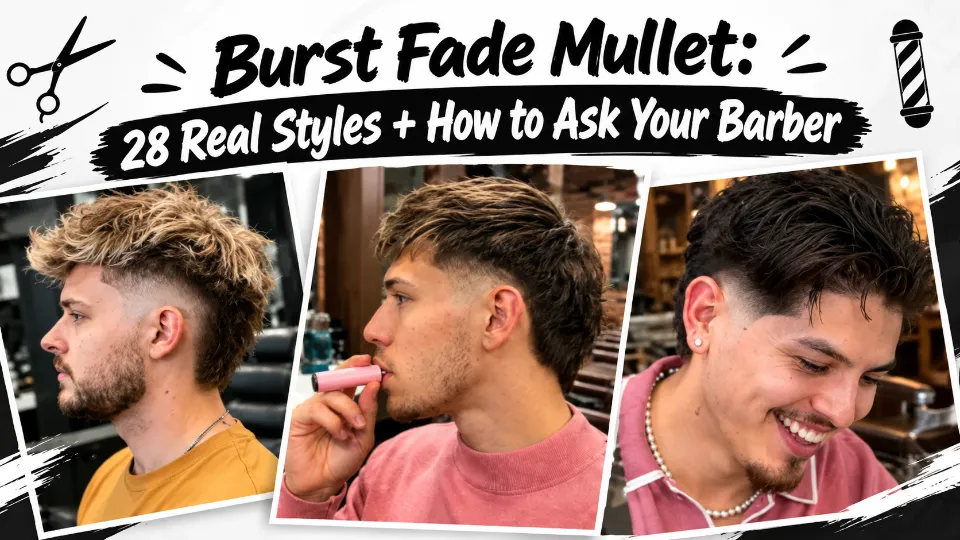
A burst fade mullet takes a fade that curves around the ear in a rounded shape and pairs it with hair left long in the back.
It’s one of the most requested burst fade variations right now, and with so many options for fade height, texture, and back length, most guys can land on a version that actually suits their face and hair — instead of just holding up a photo and hoping for the best.
What Is a Burst Fade Mullet?
At its core, a burst fade mullet is two things stacked together: a fade that curves in a semi-circle around the ear, and hair kept noticeably longer at the back.
Most barbers start a standard version around a 1 or 1.5 guard on the sides, though that number shifts depending on the clipper system they’re using, how dense your hair is, and how crisp you want the finish to look.
How It’s Different From a Standard Mullet and a Standard Burst Fade
A regular mullet is really about length, not the side technique — short or medium up front, long in back — and it’ll sit under a fade, a taper, or even scissor-cut sides without complaint.Want to keep more length at the back? A burst fade mullet combines the curved fade around the ears with a longer, textured back. Explore our Burst Fade Mullet Styles guide for more variations and styling ideas
A regular burst fade, on the other hand, is defined purely by that rounded curve near the ear rather than a straight taper line. It doesn’t care what’s happening on top.
Put the two together on purpose and you get the burst fade mullet: burst technique on the sides, mullet length in back. Because one doesn’t depend on the other, you’ve got real room to dial fade height and back length in separately.
For a similar center-focused style with more length on top, explore our Mohawk Fade Styles guide for more variations and styling ideas
.
28 Burst Fade Mullet Variations
1. Burst Fade Mullet, Straight Hair
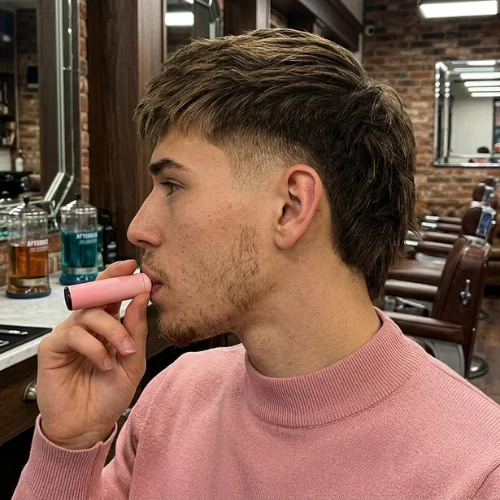
Straight hair keeps the back section flat and smooth instead of flipping out at the ends, so this version usually looks sleeker without much daily effort. It suits most face shapes without much argument. Barbers commonly start with a 1 or 1.5 guard on the sides and cut the back blunt, not layered, to keep that clean line.
2. Low Burst Fade Mullet
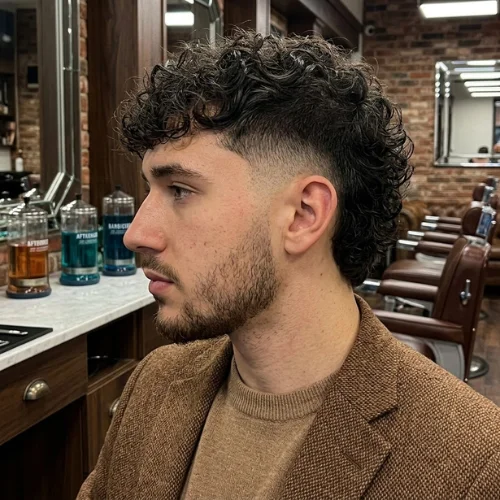
Keeps the curve close to the ear rather than climbing toward the temple. Ideal for conservative workplaces and curly or coily hair. Say “just above the ear” so it doesn’t turn into a mid fade.
This subtle, low-maintenance version works well if you want a clean look without drawing too much attention to the fade itself. Want to see how it comes together on different hair types and lengths? Check out our full breakdown of the low burst fade styles for more inspiration and styling tips.
3. Mid Burst Fade Mullet
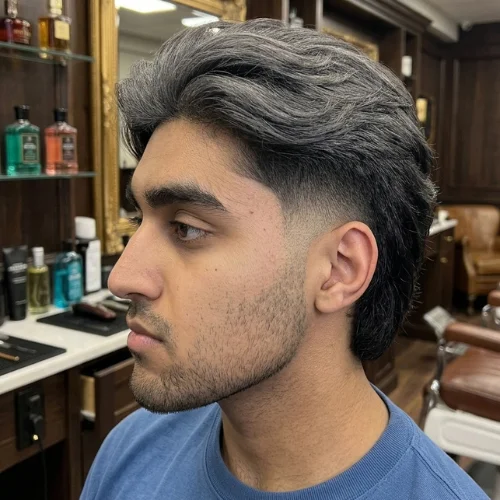
This sits right between low and high, and it’s often the safest default if you’re not sure which way to go. It flatters most face shapes.
Lining the fade height up against your temple rather than an inch measurement usually gives more consistent results, since head shape varies quite a bit from person to person.
4. Burst Taper Mullet
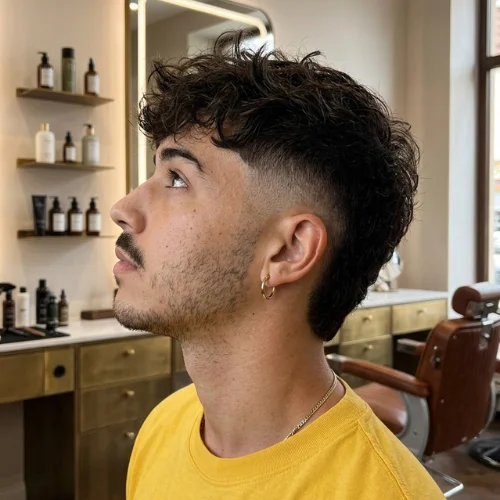
Swap the crisp skin-fade line for a softer, gradual blend — typically cut with clippers over a comb rather than straight to the skin. Finer or thinner hair often looks better this way, since a hard fade line can look stark against lower density. Specify “taper, not skin fade” so you don’t end up with the sharper default.
5. High Burst Fade Mullet
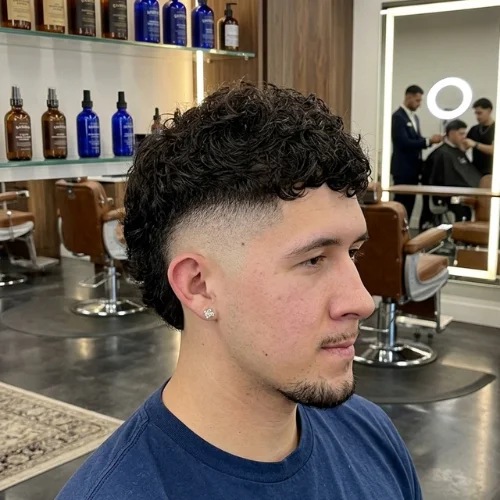
The fade climbs well above the ear here, giving you the strongest contrast against the length in back. Oval and longer face shapes carry it particularly well. Because more scalp shows, regrowth is more visible sooner, which usually means more frequent trims to keep the line sharp.
6. Modern Mullet with Burst Fade
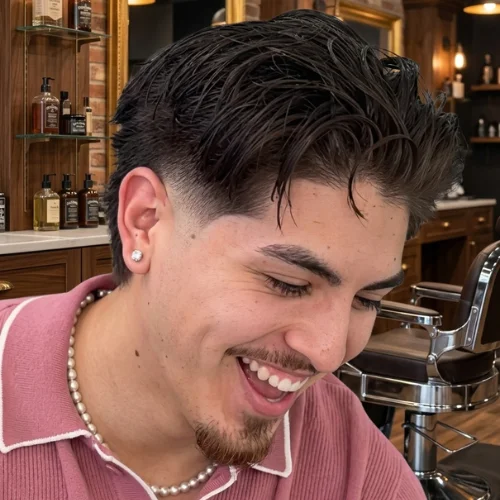
A shorter, more tapered take on the classic shape, with less dramatic back length and more focus on the fade itself. Good for people who like the mullet silhouette without it reading as retro. Bring a reference photo — “modern” means different things to different barbers.
7. Short Burst Fade Mullet
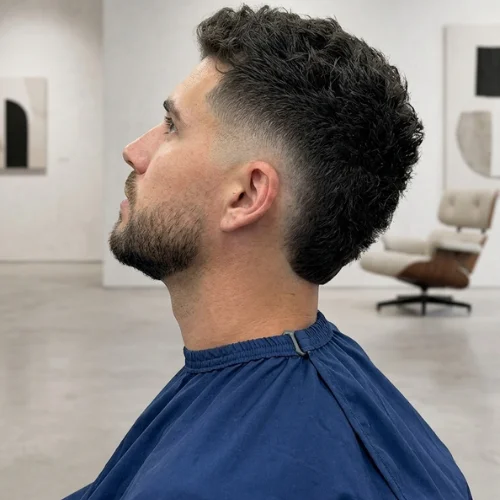
Noticeably less length in back than a standard mullet, so it can read closer to a textured crop with a nod toward the mullet shape. Daily upkeep tends to be lower here. Round and oval faces usually do well with it.
8. Taper Burst Fade Mullet, Curly Hair
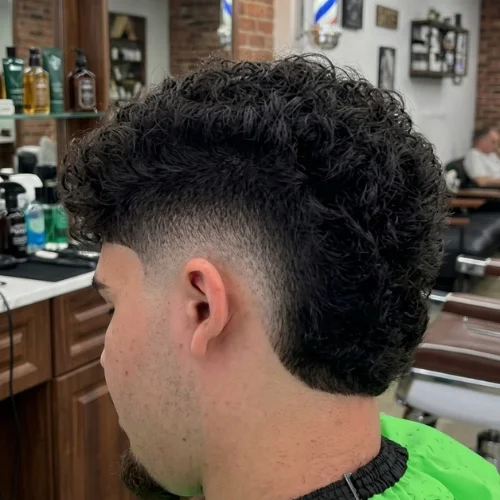
A softer taper blend usually suits curly hair better than a hard fade line, since the curl pattern already softens sharp edges on its own. Cutting the curls dry, or close to it, is the common approach — cut curly hair wet and it can end up shorter than planned once it dries and the curls spring back up.
9. Burst Fade Curly Hair Mullet
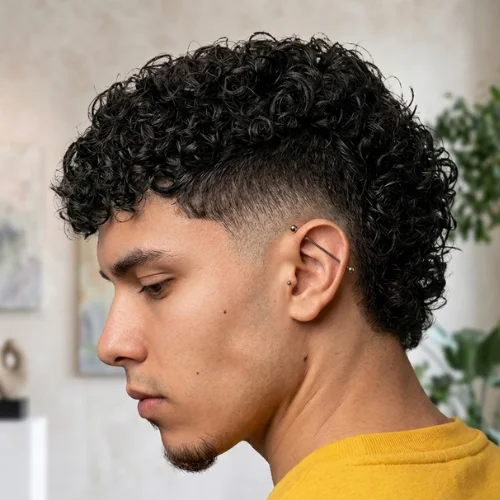
A standard, non-taper burst fade on curly hair usually holds up best at a low or mid height, where the curl shrinkage isn’t fighting against a sharp fade edge. Round and square faces tend to suit it. Expect the fade line to look a touch softer than it would on straight hair — that’s just how this texture behaves, not a sign of a bad cut.
10. Burst Fade Mullet, Kids
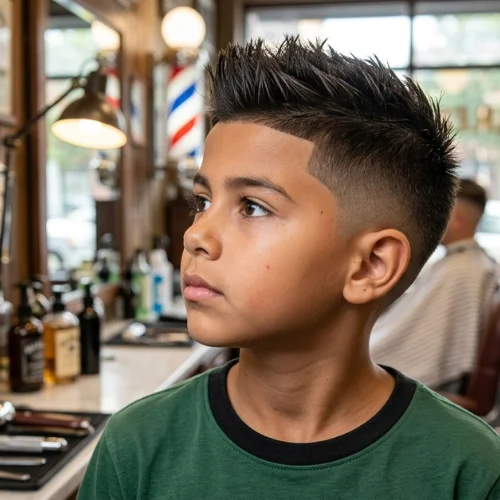
Barbers often widen the blend zone for kids, since children’s hair grows fast and a precise, tight line can need touch-ups sooner than most parents want to schedule. Most face shapes work fine at this age. A mid height with a wider blend generally holds its shape longest between visits.
11. Burst Fade Mullet, Long Hair
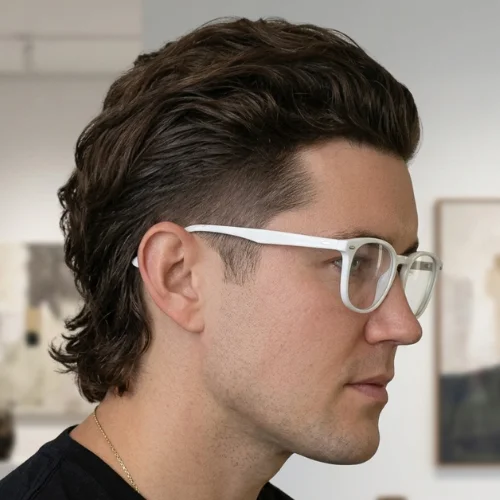
Significantly more length kept in back and at the crown for a more dramatic mullet shape. Oval or diamond faces tend to balance the extra length well. Conditioning matters more here, since longer hair dries out faster than the short, faded sides do.
12. Burst Fade Mullet, V-Cut
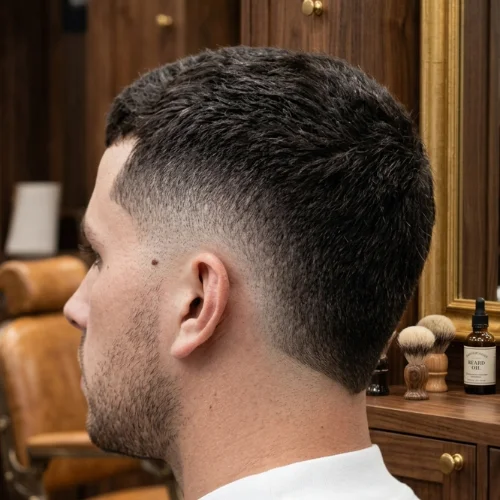
The back hairline gets cut into a V instead of straight across, adding a sharper visual point to the length. It’s a back-line detail rather than a structural change, so it works with most face shapes. It does need more frequent trims than a straight-line back if you want the V to stay crisp.
13. Burst Fade Buzz Cut Mullet
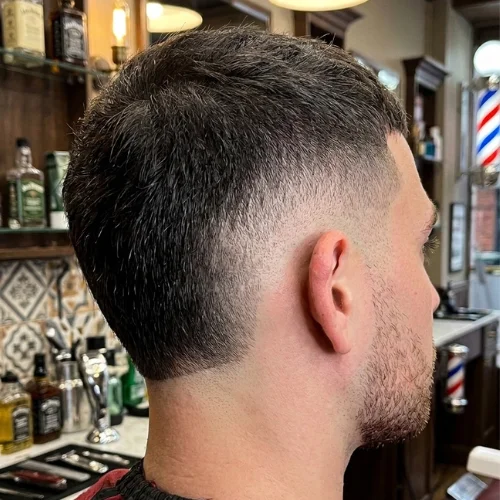
Sides buzzed down very short — often around a 0.5 guard or a skin fade — with all the length saved for the back. That’s some of the strongest contrast on this list. Oval and longer faces suit it well. Ask specifically for “buzzed sides, mullet back,” since “buzz cut mullet” on its own sometimes gets read as buzzed everywhere.
While a burst fade mullet keeps length at the back, a buzz cut offers a much shorter finish. Explore these burst fade buzz cut styles for a range of short haircut options and guard number guidance.
14. Fohawk Mullet Fade
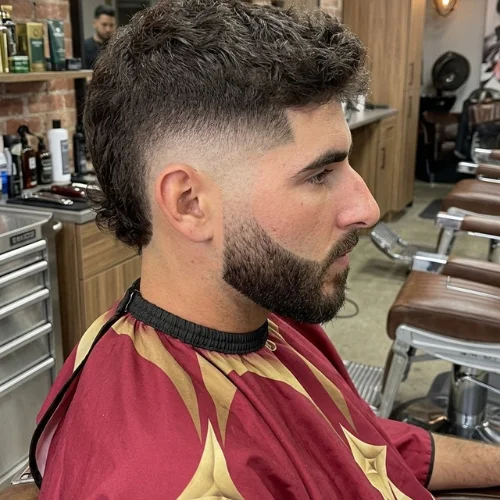
This one layers a raised center strip — similar to a faux hawk — on top of mullet length in back, with a high burst fade on the sides to make the strip pop. Oval and longer faces handle the vertical emphasis best. It’s a higher-maintenance combination: the strip usually wants daily product, and the fade needs frequent trims to stay sharp.
15. Messy Burst Fade Mullet
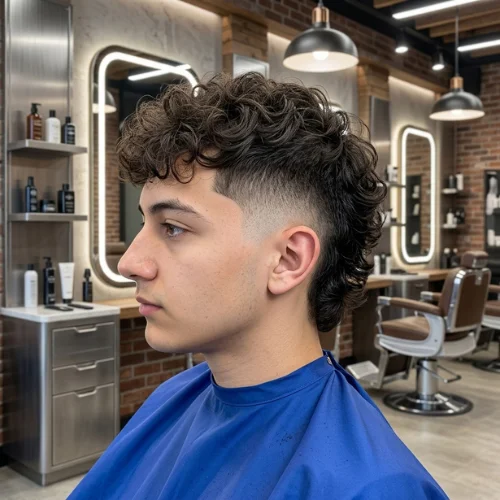
Top and back get styled loosely rather than combed into place, so the finished cut looks a little undone even right after a trim. It works because the fade underneath stays precise — the messiness only lives on top. Good for guys who want the shape without spending much time in the mirror.
16. Textured Burst Fade Mullet
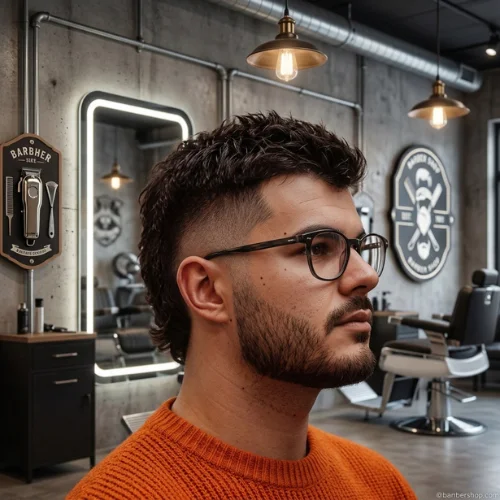
Point-cutting or shear work breaks up a flat, one-length mullet into something with more movement. Fine or flat hair that needs a fuller look tends to benefit most. Ask specifically for shears on top, not just clippers — that’s what actually builds the texture.
17. Skin Burst Fade Mullet
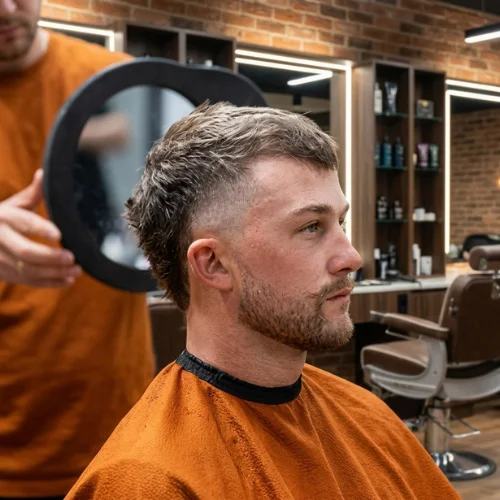
The fade goes all the way down to bare skin instead of stopping at a short guard, giving you the sharpest possible line against the mullet length. Oval and square faces suit it best. This is the highest-maintenance fade height here — expect a trim every one to two weeks to keep it sharp.
18. Drop Burst Fade Mullet
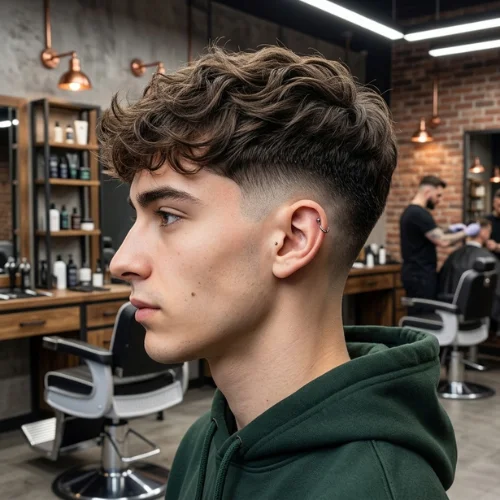
The fade line dips lower behind the ear rather than staying level, following the natural curve of the skull instead of a straight horizontal path. Square and heart-shaped faces do well with it, since the curve softens angular jawlines. This needs a barber comfortable freehanding a curved line, so it’s worth checking their portfolio first.
19. Burst Fade Mullet with Design
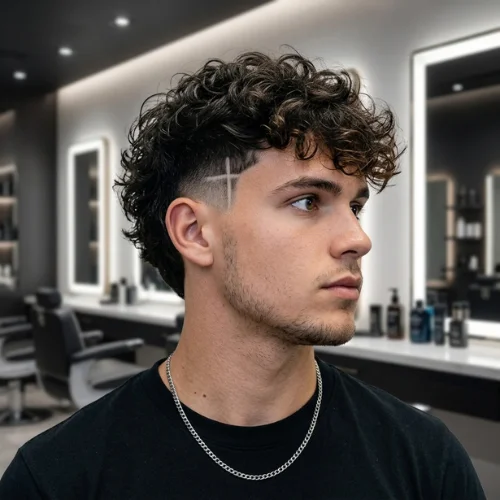
A shaved line, part, or small pattern gets added into the faded section for a more personalized finish. Since the design sits on top of the existing fade rather than changing the cut’s structure, it works with most face shapes. It’s high maintenance, though — a design line grows out and blurs faster than the surrounding fade, so plan on more frequent touch-ups.
For more ideas on creative patterns and placements, check out our Burst Fade Design Guide for inspiration before choosing your design
20. Undercut Burst Fade Mullet
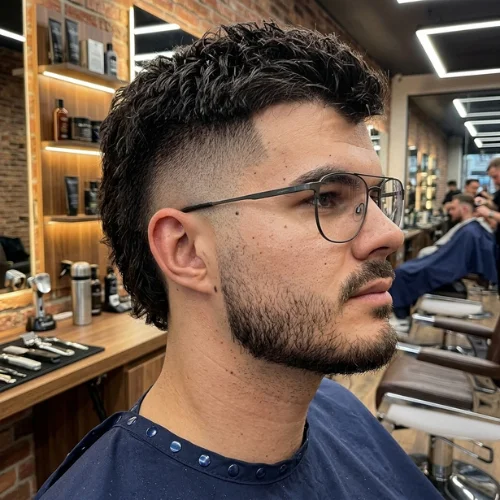
A harder, more abrupt undercut line combines with the rounded burst blend for more contrast than a standard fade gives you alone. Oval and longer faces handle the strong contrast without looking top-heavy. Because this layers two different techniques together, it’s worth confirming your barber has actually done this exact combination before.
21. Burst Fade Mullet with Beard
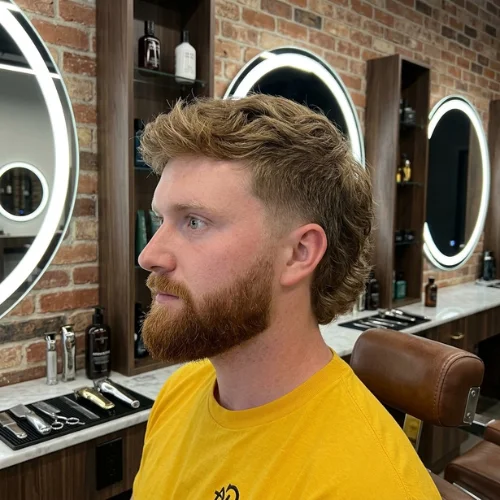
Pair the haircut with a groomed beard, often fading the beard into the same sideburn line as the haircut for a connected look. Round and oval faces tend to benefit, since the beard adds definition along the jaw. Book beard trims in the same appointment as your haircut so both stay on the same schedule.
22. Wavy Hair Burst Fade Mullet
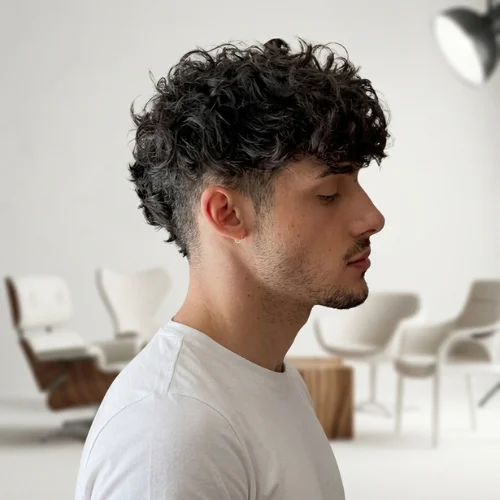
Natural waves add movement to the top and back without much styling effort, while the fade keeps the sides under control. Oval and round faces suit it well. A light sea salt spray on damp hair is usually all it takes to bring the wave pattern out.
23. Burst Fade Mullet with Fringe
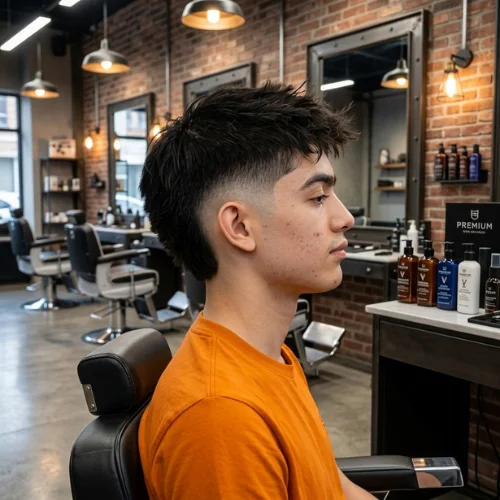
A front section of hair sits forward over the forehead instead of sweeping back, framing the face differently than a standard mullet does. Heart and round faces tend to benefit, since the fringe can soften a wider forehead. It needs a bit more upkeep at the front than a standard mullet, since fringe length shows more as it grows out.
24. Burst Fade Mullet for Thick Hair
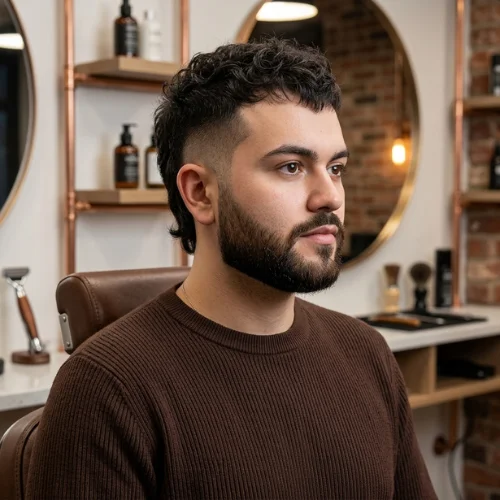
Thick hair often gets thinned through the top with texturizing shears so the cut doesn’t sit heavy once the fade clears the sides. Square and long faces tend to suit it. Ask your barber to remove weight specifically at the crown, which is usually where thick hair looks bulkiest.
25. Burst Fade Mullet for Thin Hair
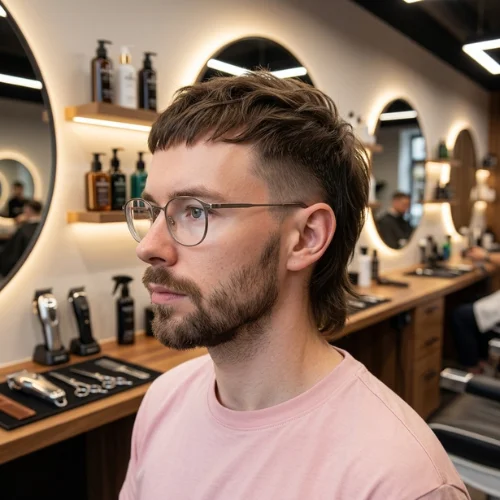
A slightly shorter overall length plus some layering can make thin hair look fuller than a longer, flatter cut would. Oval and round faces tend to suit it best. Skip the heavy pomade here — a lighter volumizing product or texture powder holds better without flattening the strands.
26. Blonde Burst Fade Mullet
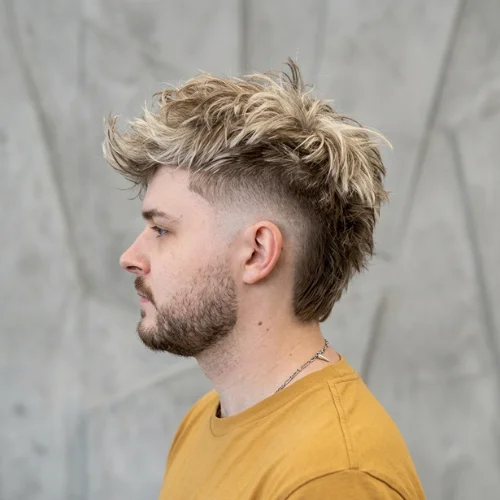
Lightened hair makes both the fade line and any texture on top more visible at a glance, since the contrast against darker roots or skin shows the shape more clearly. It works with most face shapes. Maintenance runs a bit higher once you factor root touch-ups in alongside regular haircut trims.
27. Burst Fade Mullet for Teens
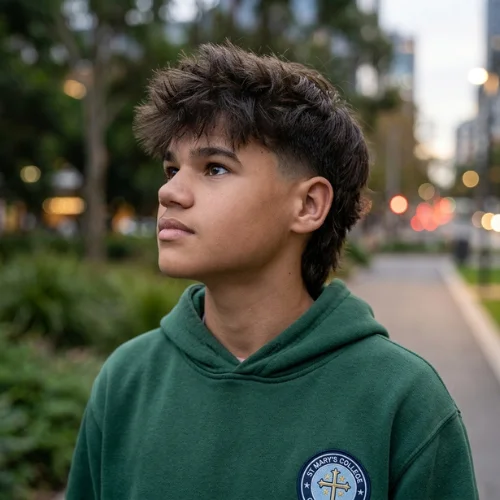
Barbers tend to keep the fade a bit more conservative and the blend wider for younger clients — partly because teenage hair grows fast, and partly because school dress codes sometimes have opinions about fade height. Most face shapes work fine at this age. A mid fade with moderate back length is usually the easiest version to get approved and to keep up between school terms.
28. Disconnected Burst Fade Mullet
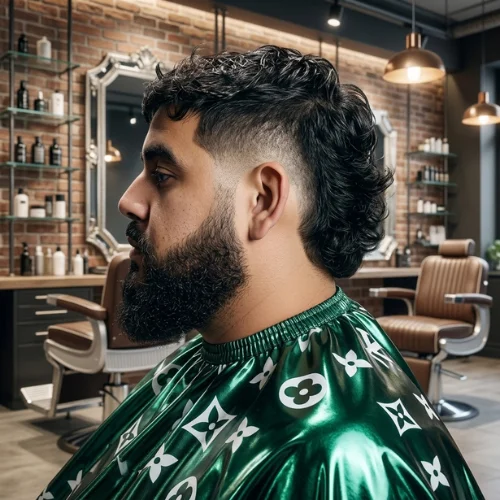
Instead of blending smoothly from fade into top, this leaves a visible, deliberate break in length between the two sections. Oval and long faces can carry the extra contrast. It’s more advanced than a standard blended burst fade, so it’s worth confirming your barber has cut disconnected styles before, not just blended ones.
Who Should Try a Burst Fade Mullet?
This cut isn’t a fit for everyone, and it’s worth saying that plainly before you book a chair.
It tends to work well if you:
● Want more contrast than a taper or crew cut gives you, but aren’t ready for fully shaved sides
● Have natural wave, curl, or thickness you’d rather show off in back than trim away
● Don’t mind seeing your barber every two to five weeks, depending on how high the fade climbs
● Like the trade-off of easy sides paired with a back section you can style or grow out
It’s probably not the right call if you need something completely wash-and-go with zero upkeep, or if your workplace runs a strict grooming policy — a high fade next to an obvious mullet reads more casual than most conservative offices are comfortable with.
If that’s a concern, a low or mid fade with a moderate back length is the safer thing to bring up, and it’s covered further down in the face-shape section
How to Ask Your Barber for This Cut
Use these when you’re describing the cut and booking the appointment — this is the vocabulary part, not the in-chair part.
1. Name the fade height specifically. “Just above the ear” for low, “at the temple” for mid, “well above the ear” for high. The word “burst” on its own doesn’t communicate height.
2. Bring one clear reference photo. A photo tends to settle disagreements about height and back length faster than describing it out loud ever will.
3. Describe the back length in real-world terms. Collar-length, past the collar, barely past the neckline — rather than an exact inch measurement, which barbers don’t always translate the same way.
4. Mention your hair texture up front. If it’s curly or coily, say so, so your barber can plan to cut it dry or near-dry rather than defaulting to a straight-hair approach.
Step-by-Step: Getting the Cut Done Right
Once you’ve said the above to your barber, here’s roughly the order things happen in once you’re in the chair. Following it tends to cut down on the “can you fix this” moments afterward.
1.Decide fade height and back length before you sit down. Use the variations above and the face-shape table below to land on a rough starting point rather than deciding once you’re already in the chair.
2.Let the barber clipper the fade first, then check it before the blend is finished. This is the easiest point to ask for it lower or higher, since nothing further back has been touched yet.
3.Raise the blend zone if you have curly or coily hair. A wider blend usually holds its shape longer on textured hair, so mention it before the scissors come out for the back section.
4.Confirm the back length once the sides are done. It’s easier for a barber to judge how much length to leave once they can see the finished fade sitting next to it.
5. Book your next trim before you leave. Fade haircuts lose their sharp line faster than most other cuts — pre-booking around the maintenance schedule below keeps you from waiting too long between visits.
Matching the Cut to Your Face Shape
| Face Shape | Tends to Work Well | Why |
| Round | High or mid burst fade mullet | Shorter, tighter sides can add visual length; a low fade may not create enough contrast to balance a rounder face |
| Square | Low or mid burst fade | A softer contrast complements strong jaw angles without competing with them |
| Oval | Most variations | This shape has the fewest restrictions — the choice usually comes down to maintenance preference |
| Long | Mid fade with fuller back length | Helps avoid adding extra visual height that could stretch the face further |
| Heart | Mid fade, some length kept at the front | Can help balance a narrower chin; pushing all the volume high on top may not help here |
| Diamond | High burst fade mullet with movement | Can soften cheekbone width; a slicked-down top sometimes emphasizes it instead |
Matching the Cut to Your Hair Type
| Hair Type | What Tends to Change |
| Straight | Usually holds the cleanest fade line — the main decision here is height, not technique |
| Wavy | Adds movement with minimal effort; a light sea salt spray on damp hair is often enough |
| Curly | A dry or near-dry cut helps avoid shrinkage leaving the finished length shorter than expected |
| Coily | Often benefits from a slightly wider blend zone and a little extra length left on top |
| Thick | Usually needs texturizing through the crown so the cut doesn’t sit heavy once the fade clears the sides |
| Thin | A shorter overall length and light layering tend to read fuller than a longer, flat cut |
Modern Mullet with Burst Fade vs. a Traditional Mullet
| Feature | Burst Fade Mullet | Traditional Mullet |
| Sides | Rounded fade that curves around the ear | Usually longer sides with less shaping, sometimes just a light trim |
| Overall look | Reads as current and barbered | Reads as retro or vintage, depending on styling |
| Maintenance | Higher — the fade needs regular trims to stay sharp | Lower — there’s no fade line to lose |
| Barber skill needed | Requires a barber comfortable with fade work specifically | Achievable with basic clipper and scissor work |
| Best for | Guys who want visible contrast and a deliberate finish | Guys who want the length without much upkeep on the sides |
Neither version is objectively better — it really comes down to whether you’d rather have the sharper, more maintained look of a fade, or the lower-effort, more classic version of the same silhouette.
Styling It
1.Start on clean, towel-dried hair. Fully wet hair makes it hard to judge how the texture will actually sit once it dries.
2. Apply a small amount of a product suited to your hair type. See the table below for what tends to work best for each texture.
3.Work the product through the back and top only. The faded sides usually don’t need product and can look greasy if it ends up there.
4.Blow-dry or air-dry with your fingers. This encourages natural movement instead of flattening it with a brush.
5.Touch up midday with a little water worked back through. Better than layering on more product, which tends to build up rather than refresh the style.
Best Styling Products by Hair Type
| Hair Type | Product | Hold | Finish | Why |
| Straight, thick | Texture clay | Strong | Matte | Holds shape all day without looking greasy |
| Wavy | Sea salt spray | Light | Textured, tousled | Enhances natural wave without weighing it down |
| Curly, coily | Curl cream | Light to medium | Defined, natural | Controls frizz and defines curl pattern without stiffness |
| Fine, thin | Texture powder or light mousse | Light | Volumized, matte | Adds lift and grip without flattening the strands |
| Any, sleeker finish | Pomade | Medium to strong | Sleek, some shine | Better for a smoothed-back look than a textured one |
Common mistake: reaching for a heavy pomade or clay on thin or fine hair. That weight flattens exactly the volume you’re trying to build — a texture powder or light mousse holds up better on that hair type.
Weekly Care Routine
● Wash two to three times a week with a sulfate-free shampoo rather than daily — washing every day strips the natural oils that keep the fade area healthy, not just the longer back section.
● Condition the back length every wash once it’s grown past collar length. That section dries out faster than the short, faded sides, especially with regular heat styling.
● Detangle before styling, not after. This matters most for wavy, curly, or coily textures, where detangling wet hair after it’s already styled tends to undo the shape and cause unnecessary breakage.
● Reapply product with a bit of water instead of adding more product. Most styling products can be reworked through the hair with damp fingers rather than piling on a fresh application every time it loses its shape during the day.
Realistic Maintenance
| Fade Height | Typical Trim Frequency |
| Low burst fade | Roughly every 4–5 weeks |
| Mid burst fade | Roughly every 3–4 weeks |
| High or skin burst fade | Roughly every 1–2 weeks |
| Back / mullet length | Trim the ends every 8–12 weeks to prevent split ends without losing length |
These timeframes are only general guidelines, since everyone’s hair grows at a slightly different rate. Your barber may also charge more or less depending on the shop, location, and service. For keeping your hair looking fresh between cuts, you can also use quality hair-care products from Keune Haircare that suit your hair type and styling needs
Common Mistakes to Avoid
Asking for “a burst fade” without a height. This is one of the most common miscommunications out there — naming low, mid, or high, or pointing to a photo, heads it off.
Choosing a fade height that fights your face shape. Checking the face-shape table above before the appointment, rather than after, tends to give better results.
Skipping trims on the fade while letting the back grow untouched. The two sections grow at similar rates underneath, but the fade shows that growth first and more visibly.
Overusing styling product on curly or coily hair. A little goes further on textured hair than on straight hair; too much weighs the curl pattern down instead of showing it off.
Picking a barber without specific fade experience. A burst fade lives or dies on rounding that blend correctly around the ear — asking to see the technique in a portfolio beforehand is a reasonable ask, especially for a first attempt.
FAQs
What’s the actual difference between a burst fade and a regular taper fade?
A taper fade tapers down in a straight vertical line. A burst fade curves around the ear instead. It’s a small technical difference, but it’s essentially what gives the style its name and its softer transition near the ear.
Can I get a burst fade mullet if my hair is thin or fine?
Usually, yes — a burst taper, the softer blend version, tends to look better than a hard skin fade on thinner hair, since a sharp line can look stark against lower density. A slightly shorter back can also help thin hair read fuller rather than stringy.
How long does it typically take to grow a proper mullet length at the back?
Most people need something like three to six months of growth before the back has enough length to look intentional instead of just “growing out.” Asking a barber to shape the back for growth from the very first cut can save you from starting over later.
Which variation is a reasonable starting point if I’ve never had a mullet before?
A mid burst fade mullet with a moderate back length is usually the safer entry point — it’s forgiving across face shapes and easy enough to push toward bolder or subtler later on.
Does this haircut tend to work for a professional office environment?
A low or mid burst fade mullet with a moderate back length reads as fairly conservative. A high fade, a shaved design, or a noticeably long back leans more casual — worth checking a specific workplace’s grooming expectations if you’re unsure.
What’s the difference between a burst fade mullet and an undercut burst fade mullet?
A standard burst fade blends gradually from short to long. An undercut version cuts the sides much shorter and more abruptly before the burst curve takes over, so the contrast against the mullet length hits harder and more immediately.
Is a burst fade mullet appropriate for teenagers?
Yes, and it’s a common request in that age group. Barbers typically keep the fade a bit more conservative and the blend wider for younger clients — school policies sometimes have opinions on fade height, and teenage hair grows fast enough that a tight line needs frequent upkeep.
Do I need to find a barber who specializes in mullets specifically?
Not necessarily a mullet specialist, but you do want someone comfortable with fade work, since the burst curve around the ear is a distinct technique from a straight taper. Checking a barber’s portfolio for burst fade examples before booking is a reasonable step either way.