
Burst Fade Blonde Hair: Choose Your Shade, Fade Height and Color Care
Quick Answers Before You Book
• Burst fade blonde hair pairs a curved burst fade at the ears with a blonde top, and three choices shape it: shade, color placement and burst height.
• Pale hair shows the skin and the curve more than dark hair does, so the burst height matters more.
• Get the cut done first, then the color, and tell both people what the other one did.
• Twelve looks follow, and each one comes with a line to read to your barber.
Burst Fade Blonde Hair: Pale Top, Curved Sides
Think of burst fade blonde hair as a burst fade, with its arc around each ear, topped with blonde color. The color can be full bleach, soft highlights or a natural blonde. The curve stays at the sides and the color sits above it.
Pale hair changes what a burst fade shows. Dark hair hides some of the gradient, but light hair lets the skin come through, so the curve around the ear looks sharper and the contrast looks softer at the same time.
Compared with a plain skin fade, the burst keeps the curve visible but softens the line around the ear. That is why burst fade blonde hair often looks cleaner than a straight fade under the same pale top.
Burst fade blonde hair also grows out in two ways. The cut loses its shape first, and then new growth shows at the root of the color.
The cut and the color are two separate jobs. Shops name these styles differently, so bring a photo of the shade and a photo of the fade.
Shade, Color Placement and Burst Height
| Choice | What it decides | What to tell your barber |
| Shade | How bright or warm the top looks | Name the shade and bring a photo |
| Color placement | Whether the color covers the top or only parts of it | Full top, highlights or a dark root |
| Burst height | How much skin shows under the pale top | Low, mid or high |
Decide on these three before you sit down. When they suit each other, burst fade blonde hair looks planned. Every look below uses the same three choices, so this table explains the request lines that follow.
Pick the Shade
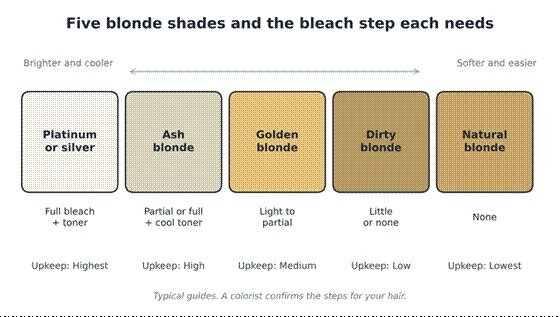
| Shade | Who it tends to suit | Bleach step | Upkeep |
| Platinum or silver | Fair or cool skin, a bold look | Full bleach and a toner | Highest |
| Ash blonde | Fair to medium skin, cool tone | Partial or full, plus a cool toner | High |
| Golden blonde | Warm or tan skin | Light to partial | Medium |
| Dirty blonde | Most skin tones, soft contrast | Little or none | Low |
| Natural blonde | Naturally light hair | None | Lowest |
These are typical guides and a colorist should confirm them for your hair. The darker your starting hair, the more steps a pale shade needs, and more steps mean more upkeep.
Before you commit, ask the colorist for a strand test or a lighter first step. Photos help most when they show the shade in daylight. A strand test shows how your hair reacts before the whole top changes, which saves time and avoids surprises.
If you are unsure, start one shade lighter than your natural hair. A soft change is easy to grow out, and you can go brighter next time.
What Pale Hair Does to the Curve
| Burst height | What shows with a pale top | Best fit |
| Low | A soft gradient with little skin | A quiet, easy look |
| Mid | A clear curve and a balanced frame | Most men trying blonde |
| High | More skin and a brighter top | A bold, high-contrast look |
| Skin finish | The sharpest edge between hair and skin | Confident, short-window upkeep |
A higher burst lets the pale top stand out because more skin frames it. With a low burst the sides stay near the top in length, so the color blends in and the head looks softer. Choose the height by how bold you want the contrast to be.
A dark root changes the picture again. Where the color starts a little above the skin, the burst curve and the root form two soft layers, and growth shows less. Ask whether the color should reach the top of the burst or stop above it.

Cut First or Color First
Most barbers cut first. The cut sets the shape, and a fresh cut gives the colorist clean edges to work with. Then the top gets its color.
If you color first, say so before the cut. Color-treated hair can feel drier and more fragile, so the barber may handle it differently. The same goes the other way around, so tell your colorist about a fresh burst.
On cut day, tell the barber how long ago the hair was lightened. If the ends feel dry, the barber may leave the top a little longer, because dry ends often look cleaner with a softer cut than with a very short one.
Whoever you see second should know what the first person did. A short note on the date and the shade saves a lot of guessing.

Bleach Safety and Color Care
Lightening hair is a big change. Keep it simple and safe with three actions.
• Patch test first: follow the product directions and try a small spot before you color your whole top.
• See a colorist for a big jump: going from dark brown to near white is better done by someone who does it every day.
• Watch your scalp: see a doctor if itching, burning or sores last after coloring.
Pale shades fade and turn brassy, which means yellow or orange tones. Purple shampoo tends to cut brass but does not repair hair, so use it now and then with a gentle shampoo and a conditioner.
After coloring, keep washes gentle and give the top a conditioner. Sun, pool water and hot tools tend to wear color down, so a cap or a leave-in product helps. Burst fade blonde hair needs more care than dark hair, because pale shades show wear sooner.
| Shade | Main risk | Care |
| Platinum or silver | Brass and dryness | A cool toner refresh, a gentle shampoo and a conditioner |
| Ash blonde | Warm tones creeping back | A cool toner refresh and a gentle shampoo |
| Golden blonde | Fading and dull ends | A gentle shampoo and a conditioner |
| Dirty or natural blonde | Dull, dry ends | A conditioner and less heat |
Twelve Blonde Looks Over a Curved Fade
Each look has a request line to read aloud and a tip to remember.
Shades of Blonde
The first five looks run from the brightest platinum to a blonde with no color at all.
Platinum Top Held Bright Above the Burst

Near-white hair on top gives the strongest glow against the skin showing around the burst curve. It needs a full bleach plan and a toner to stay clean and bright.
• Request: Platinum top, mid burst, short clean sides, colorist-matched toner.
• Tip: Book the color first and share the date with your barber.
Ash Blonde Top Kept Cool and Soft

An ash blonde top carries cool, grey-leaning tones that look calm beside the burst curve. A toner helps hold the cool shade as warm tones start to creep back.
• Request: Ash blonde top, cool tone, low burst, soft sides.
• Tip: Bring a photo, because ash looks different in every light.
Golden Blonde Top With Warm Light

A golden blonde top adds warm, sunny tones that suit warmer skin. The color asks for less lightening than platinum, so upkeep stays lighter and the burst reads clearly.
• Request: Golden blonde top, warm tone, mid burst, clean neckline.
• Tip: Ask the colorist how fast this warm shade tends to fade.
Dirty Blonde Top Left Natural

Dirty blonde sits close to a darker natural color, so it needs little or no lightening. The soft contrast makes the burst curve the main feature of the whole cut.
• Request: Dirty blonde top, soft contrast, mid burst, short taper.
• Tip: Pick this shade if you want the least upkeep.
Natural Blonde Hair With No Bleach

If your hair is already blonde, the barber only has to shape the burst. There is no color step, so the cut does all the work and the curve stays clean.
• Request: Natural blonde, no color step, high burst, clean textured top.
• Tip: Trim the top often to keep the shade tidy.
Full Top or Partial Color
These two looks decide how the blonde meets the sides.
Bleached Top Standing Out From Dark Sides

A bleached top over dark sides makes a sharp break at the join between color and burst. The contrast pulls the eye to the top and keeps the curve very visible.
• Request: Bleached top, dark sides, mid burst, clear line at the join.
• Tip: Ask for a clean join, because the color break shows slips.
Highlights Woven Through a Dark Top

Fine highlights add light to a dark top without lifting all the hair. The darker base keeps depth, so growth shows less and upkeep is easier than a full bleach.
• Request: Fine highlights, dark base, low burst, soft natural fade.
• Tip: Choose a shade one or two steps lighter than your base.
Low, Mid and High Under Pale Hair
Burst height changes the contrast, so these three length-only looks show it with pale hair.
Low Burst Beneath a Pale Top

A low burst leaves fuller sides and a quiet curve beneath the pale hair. Fuller sides are covered on the low burst fade page.
• Request: Pale top, low burst, soft curve, gentle taper behind the ear.
• Tip: Leave sides a touch fuller so the color leads.
Mid Burst Framing Light Hair

A mid burst frames light hair with a clear curve and balanced skin. It is the middle ground on the mid burst fade page.
• Request: Light top, mid burst, clean curve at the ear, tidy neckline.
• Tip: Mark where the curve should begin with a finger.
High Burst Setting Off a Bright Top

A high burst shows the most skin, so the bright top looks lifted and bold. To compare heights, open the high burst fade guide.
• Request: Bright top, high burst, bare skin at the temples, clean arc.
• Tip: Book earlier visits, because bare skin shows new growth fast.
Top Shapes in Blonde
The last two looks change the shape of the blonde top.
Slicked-Back Blonde Combed Smooth

Combing a blonde top straight back shows the color in one smooth sweep. The slick back burst fade page has more ways to style it.
• Request: Blonde top slicked back, mid burst, clean temples, smooth finish.
• Tip: Choose a light product to keep the shade even.
Faux Hawk Strip in Blonde

A raised blonde strip draws the eye up while the burst keeps the sides tidy. For the full cut, see the burst fade faux hawk guide.
• Request: Blonde center strip, short burst sides, soft lift at the front.
• Tip: Ask for color on the strip only to save upkeep.
Style a Pale Top
Pale hair shows product more than dark hair does, so use light types and add slowly.
1. Start with clean, towel-dried hair.
2. Use a gentle shampoo and a conditioner after each wash.
3. Dry the top on a low heat setting, because hot air can dry out color.
4. Work a small amount of light, matte product through the top.
5. Check the shade in daylight, and ask your colorist if it looks yellow or dull.
Pale hair shows oil and product sooner than dark hair. Wash on a steady schedule that suits your scalp, and let the shade look clean instead of glossy.
Heavy, shiny products can make a pale top look greasy. When the top falls flat by afternoon, a shorter cut often holds better than extra product.
Hair Type and Skin Tone Under Blonde
| Hair type | What changes | Watch for |
| Straight | Color shows evenly and the burst reads sharply | Flat roots under a pale top |
| Wavy | Color adds light to the waves | Dry ends after lightening |
| Curly or coily | Color needs extra moisture care | Dryness and breakage |
| Fine | Pale shades lift gently but break more easily | Damage from strong lightening |
| Thick | Color takes longer and needs even coverage | Patchy results |
Hair type also decides how much lightening is wise. Fine hair breaks more easily after bleach, and coily or curly hair dries out more, so a softer shade or highlights may protect it. Straight hair shows the color evenly.
Skin tone matters too. Warm tones usually pair with golden shades, cool tones with ash and platinum, and softer contrast with dirty blonde. If you are not sure, try a free face shape detector for a quick start on the shape of the top, then let your barber decide.
Blonde Burst Beside Nearby Cuts
| Cut | Pick it if |
| Burst taper | You want a softer curve with no bare skin |
| Mullet | You want length at the back and a statement shape |
| Mohawk | You want a strip with hard sides |
| Faux hawk | You want soft height down the center |
Nearby cuts share the curve but change the rest. A burst taper keeps more hair at the sides, a mullet adds length at the back, and a mohawk or faux hawk shapes the top. Burst fade blonde hair works with any of them, but the color decision stays the same.
When to Rebook the Cut and the Color
| What | Typical window | What shows first |
| Burst and sides | Low burst three to four weeks, mid two to three, high one to two | The arc behind the ear |
| Top length | About every three to four weeks | The shape of the top |
| Root touch-up on bleached hair | Roughly every four to eight weeks | The line between new growth and color |
| Natural blonde | Cut only, no color step | The shape of the burst |
Color and cut run on separate schedules, so book each one when it starts to look soft. Treat the windows as typical, not fixed.
Lines to Read in the Barber Chair
• Bring one photo of the shade and one of the fade.
• Say if the hair has been lightened and when.
• Name the burst height and how much skin should show.
For burst fade blonde hair, try this line: “Burst fade, mid burst, blonde top, clean curve at the ear.” Swap in your own picks. Skip vague labels such as surfer blonde, since shops read them in different ways.
| Shade | Line to read aloud |
| Platinum or silver | Burst fade, high burst, platinum top, clean curve. |
| Ash blonde | Burst fade, mid burst, ash top, cool tone. |
| Golden blonde | Burst fade, low burst, golden top, soft taper. |
| Natural blonde | Burst fade, mid burst, textured top, no color step. |
Five Color Slips and Who Should Pick Another Style
• Skipping the patch test: try a small spot first, as the product directions say.
• Lightening too fast: go one shade at a time if your hair is dark.
• Letting brass build up: book a toner refresh before the yellow tones settle in.
• Using too much heat: dry the top gently and lower the heat setting.
• Forgetting the order: tell your barber and your colorist what each one did.
If your hair breaks easily or your scalp is sensitive, ask for natural blonde or soft highlights instead of full burst fade blonde hair. Short on time for the chair? A low burst with a darker root cuts down the visits.
Frequently Asked Questions
Do you have to bleach your hair for burst fade blonde hair?
Not always. Naturally blonde hair needs no color step, and dirty blonde needs little. Platinum and ash shades usually need bleach and a toner, so a colorist should plan the steps. Ask for a strand test first. Skip bleach if your hair is fragile.
Should you cut first or color first for burst fade blonde hair?
Most barbers cut first so the shape is set, then the top gets its color. Coloring first is fine too, but mention it at the start of the visit. The second professional should always know what the first one did, and color-treated hair can feel drier.
Which blonde shade works best with a burst fade?
It depends on your skin and your hair. Golden tones tend to suit warmer skin, ash and platinum suit cooler skin, and dirty blonde suits most tones. Bring a photo, and let a colorist confirm the shade your burst fade blonde hair needs.
How do you stop blonde hair turning brassy?
Brass means yellow or orange tones creeping back. A toner refresh from a colorist helps most, and a purple-tinted shampoo can take the edge off between visits. It will not repair damaged hair, so rinse well and keep a conditioner in the routine.
How often should you refresh the cut and the color?
Sides and burst need a visit about every three to four weeks for a low burst, two to three for a mid and one to two for a high, while the top can wait three to four. Bleached hair usually needs a root touch-up every four to eight weeks. These are typical windows for burst fade blonde hair, and your barber can adjust them.
Is bleaching hair safe for a burst fade?
Lightening is a big change, so keep it simple. Patch test as the product directions say, see a colorist for a big jump, and see a doctor if itching, burning or sores last. Natural blonde skips bleach entirely, which avoids the question.
Final Thought
Pick the shade first, then the burst height, and let the color care keep burst fade blonde hair looking fresh. The full set of burst fade guides covers each cut named above.
Editorial Note
What you read here is general grooming advice and not a medical opinion. Your colorist and your barber make the final call on shade, bleach and cut, because they can see your hair in person. Check with a doctor if itching, burning or breakage does not settle.

